Role of Artificial Intelligence in Kerala Construction Projects
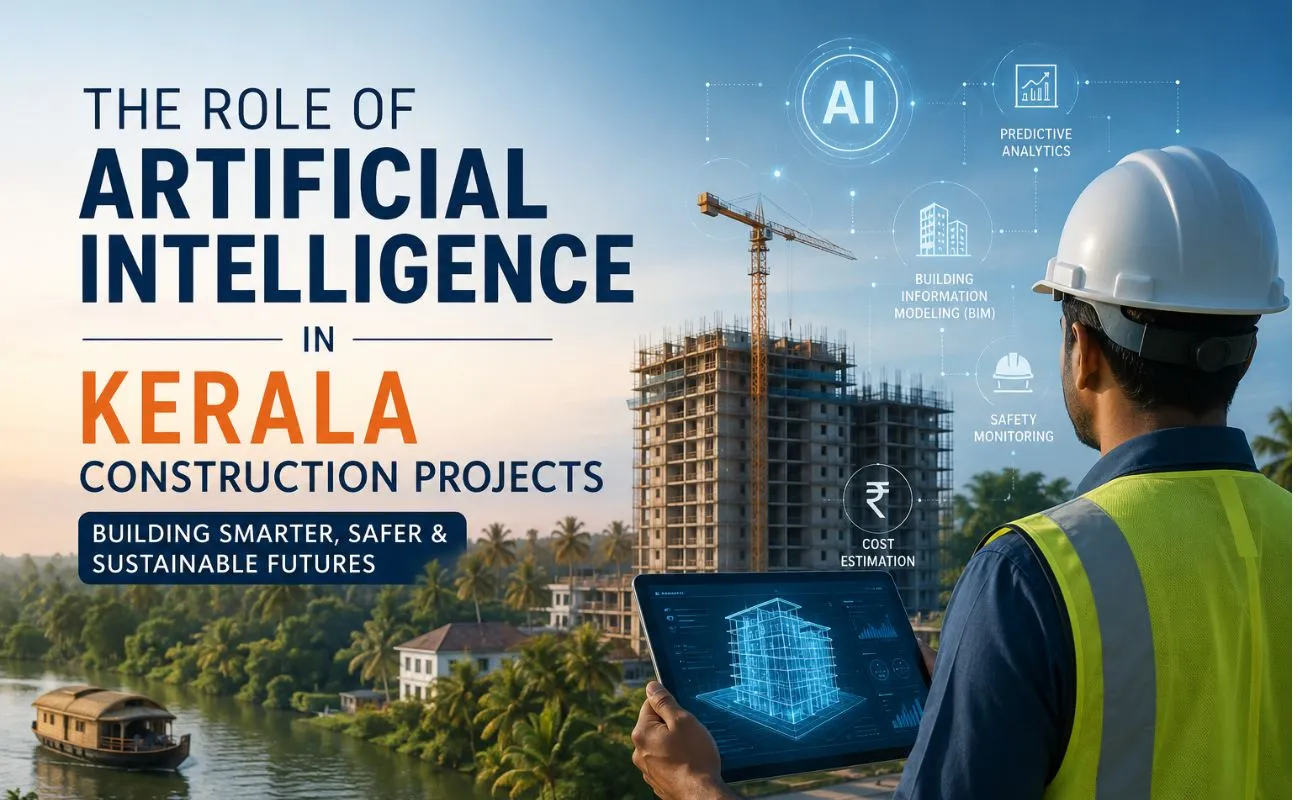
Artificial Intelligence: A Game Changer for Construction Projects in Kerala
The construction industry is entering a new era where data, automation, and intelligent decision-making are becoming just as important as materials and manpower. Across the globe, Artificial Intelligence (AI) is helping construction companies improve efficiency, reduce risks, and deliver projects with greater accuracy. Kerala is also witnessing this technological shift as builders and developers seek smarter ways to manage increasingly complex projects.
For any Construction Company in Kerala, adopting innovative technologies is no longer a future consideration; it is becoming a practical necessity. From residential developments and commercial buildings to infrastructure projects, AI is creating opportunities to improve planning, execution, and project outcomes.
Companies that continuously adapt to evolving construction practices, including firms like Webuild LLP, contribute to the growing modernization of Kerala's construction sector by embracing quality-driven and future-focused project methodologies.
What is Artificial Intelligence in Construction?
Artificial Intelligence in construction refers to the use of computer systems and machine learning technologies that can analyze data, identify patterns, predict outcomes, and assist with decision-making.
Instead of relying solely on manual processes, AI enables construction teams to use data-driven insights throughout the project lifecycle.
AI can support:
- Project planning
- Cost estimation
- Resource allocation
- Site monitoring
- Equipment management
- Risk assessment
- Quality control
- Safety management
By processing vast amounts of information quickly, AI helps construction professionals make informed decisions that improve project performance.
Why is Artificial Intelligence Important for Kerala Construction Projects?
Kerala's construction industry faces unique challenges that require innovative solutions. Rapid urbanization, increasing client expectations, rising material costs, and environmental considerations make project management more demanding than ever.
Artificial Intelligence offers practical solutions to many of these challenges.
Managing Weather-Related Risks
Kerala experiences heavy monsoons and unpredictable weather patterns. AI-powered forecasting systems can help construction teams plan activities more effectively and reduce weather-related disruptions.
Addressing Labor Challenges
The construction sector often experiences labor shortages and workforce management issues. AI-assisted scheduling and productivity tracking help optimize workforce utilization.
Improving Cost Control
Material price fluctuations can significantly affect project budgets. AI tools can analyze market trends and assist in more accurate cost forecasting.
Reducing Project Delays
Project delays remain a common concern across the industry. AI can identify scheduling conflicts and potential bottlenecks before they impact project timelines.
Enhancing Quality Standards
Modern clients expect high-quality construction outcomes. AI-supported inspection systems can help identify defects early and maintain consistent quality standards.
Who Can Benefit from AI in Kerala's Construction Industry?
The benefits of Artificial Intelligence extend across multiple stakeholders within the construction ecosystem.
Construction Companies
AI helps improve productivity, profitability, and operational efficiency.
Project Managers
Project managers gain access to real-time project insights, enabling faster and more informed decisions.
Engineers
Engineers can use AI-generated analysis to improve structural planning and resource allocation.
Architects
AI assists architects in evaluating design alternatives and improving space utilization.
Developers
Property developers benefit from better project forecasting and reduced risks.
Government Infrastructure Projects
Public infrastructure developments can improve project transparency, efficiency, and budget management.
Investors
Investors gain greater confidence through improved project monitoring and risk assessment.
Homeowners and Clients
Clients benefit from timely project completion, better quality, and improved communication throughout the construction process.
Where is AI Used in Construction Projects?
Artificial Intelligence is finding applications across nearly every stage of construction.
Site Monitoring
AI-powered cameras and monitoring systems help track project progress and identify safety concerns.
Project Scheduling
Intelligent scheduling tools analyze timelines and recommend adjustments to improve efficiency.
Resource Management
AI helps allocate labor, equipment, and materials more effectively.
Safety Monitoring
Advanced systems can identify unsafe behaviors and hazardous conditions before accidents occur.
Quality Inspections
Image recognition technologies can detect construction defects that may otherwise go unnoticed.
Equipment Tracking
AI assists in monitoring equipment usage, maintenance requirements, and operational efficiency.
Cost Estimation
Machine learning models improve budget forecasting by analyzing historical project data.
Building Information Modeling (BIM)
AI enhances BIM systems by improving project visualization, coordination, and planning accuracy.
When Should Construction Companies Adopt AI?
One of the most common misconceptions is that AI should only be introduced after project challenges arise.
The most effective approach is to integrate AI early in the project lifecycle.
During Project Planning
Early adoption improves forecasting, budgeting, and scheduling accuracy.
During Design Development
AI tools can help evaluate design alternatives and identify potential construction challenges.
During Construction Execution
Real-time monitoring improves productivity and safety performance.
During Project Maintenance
AI continues to provide value through predictive maintenance and facility management.
Companies that embrace AI early often gain a significant competitive advantage by improving operational efficiency and reducing long-term costs.
How Artificial Intelligence Works in Construction Projects
AI functions through a structured process that transforms data into actionable insights.
Data Collection
Information is gathered from project documents, sensors, drones, cameras, equipment, and management software.
Data Processing
The collected data is organized and analyzed using advanced algorithms.
Pattern Recognition
AI identifies trends, inefficiencies, and risk factors based on historical and real-time information.
Predictive Analysis
Potential issues such as delays, cost overruns, or safety risks are forecast before they occur.
Automated Recommendations
The system suggests actions that can improve project outcomes.
Continuous Learning
As more project data becomes available, AI systems become increasingly accurate and effective.
Top Benefits of AI in Kerala Construction Projects
Artificial Intelligence provides measurable advantages throughout the construction process.
Improved Efficiency
AI reduces manual tasks and streamlines project management processes.
Better Budget Management
Accurate forecasting helps prevent unexpected cost overruns.
Faster Project Delivery
Improved planning and scheduling contribute to shorter project timelines.
Enhanced Safety Standards
AI-based monitoring systems support safer construction environments.
Reduced Construction Errors
Early identification of issues helps minimize costly rework.
Improved Decision-Making
Project teams can make informed decisions using real-time insights.
Sustainability Benefits
AI supports efficient material usage and waste reduction.
Predictive Maintenance
Equipment failures can be anticipated and addressed before they cause disruptions.
Key Advantages at a Glance
- Higher productivity
- Reduced delays
- Improved quality control
- Better resource utilization
- Enhanced worker safety
- Stronger financial management
- Greater project transparency
- Increased client satisfaction
AI Applications in Kerala's Construction Industry
As technology adoption grows, AI is becoming increasingly relevant across various project categories.
Residential Construction
AI assists with project scheduling, material planning, quality inspections, and customer communication.
Commercial Buildings
Office complexes, retail developments, and hospitality projects benefit from AI-driven project coordination.
Infrastructure Development
Roads, bridges, transportation facilities, and public infrastructure projects can leverage AI for large-scale project management.
Smart Buildings
AI supports intelligent building systems that improve energy efficiency and operational performance.
Healthcare Facilities
Hospitals and healthcare projects can utilize AI-enhanced planning to meet complex construction requirements.
Educational Institutions
Large educational campuses benefit from AI-assisted scheduling and resource optimization.
Mixed-Use Developments
Complex developments involving multiple building types require advanced coordination that AI can provide.
Challenges of Implementing AI in Kerala Construction
Despite its advantages, AI adoption is not without challenges.
Initial Investment Requirements
Technology implementation often requires upfront investment in software, hardware, and training.
Skill Development Needs
Employees may require training to effectively use AI-powered systems.
Data Quality Issues
The effectiveness of AI depends on accurate and reliable project data.
Integration Challenges
New technologies must work alongside existing construction processes and software platforms.
Resistance to Change
Some organizations may be hesitant to move away from traditional practices.
Cybersecurity Considerations
Digital systems require appropriate security measures to protect project information.
Addressing these challenges requires strategic planning and long-term commitment.
Future of AI in Kerala Construction Industry
The future of construction in Kerala is likely to become increasingly technology-driven.
Several emerging trends are expected to shape the industry's next phase of growth.
Digital Twin Technology
Virtual project replicas will enable continuous monitoring and optimization.
Predictive Analytics
Advanced forecasting will improve project planning accuracy.
Construction Robotics
Automation will support repetitive and labor-intensive activities.
Smart Project Management
AI-powered platforms will provide deeper project insights and better collaboration.
Sustainable Construction
AI will help optimize resource consumption and reduce environmental impact.
Intelligent Infrastructure
Future infrastructure projects will increasingly rely on data-driven management systems.
As Kerala continues to expand its urban and infrastructure development initiatives, AI is expected to become a key contributor to project success.
Best Practices for Successfully Adopting AI
Construction organizations can improve implementation outcomes by following a structured approach.
Start Small
Begin with pilot projects before expanding AI usage across multiple operations.
Focus on Business Goals
Technology should address specific project challenges and measurable objectives.
Invest in Training
Provide employees with the skills needed to use new technologies effectively.
Maintain High-Quality Data
Reliable data improves AI performance and decision-making accuracy.
Choose the Right Technology Partners
Work with experienced providers who understand construction industry requirements.
Monitor Results
Track performance improvements and continuously refine implementation strategies.
Frequently Asked Questions
How is Artificial Intelligence used in construction projects?
AI is used for project planning, scheduling, cost estimation, safety monitoring, quality inspections, resource management, and predictive analytics.
Why is AI important for Kerala's construction industry?
AI helps address challenges such as project delays, labor shortages, cost management, quality control, and weather-related disruptions.
Can small construction companies adopt AI?
Yes. Many AI tools are scalable and can be implemented gradually, allowing smaller companies to benefit without major investments.
Does AI replace construction workers?
No. AI supports workers by improving decision-making, reducing repetitive tasks, and enhancing productivity rather than replacing human expertise.
What is the future of AI in Kerala construction projects?
The future includes smart buildings, predictive analytics, digital twins, robotics, sustainable construction practices, and more efficient project management systems.
Conclusion
Artificial Intelligence is reshaping the way construction projects are planned, managed, and delivered. From improving project schedules and cost control to enhancing safety and quality, AI offers practical solutions to many of the challenges facing today's construction industry.
For every Construction Company in Kerala, the ability to leverage intelligent technologies can create significant advantages in an increasingly competitive market. As digital transformation continues to influence the sector, organizations that embrace innovation will be better positioned to deliver efficient, sustainable, and high-quality construction outcomes.
The ongoing evolution of construction practices highlights the importance of forward-thinking approaches. Companies such as Webuild LLP contribute to this progress by supporting modern construction standards, quality execution, and future-ready project development that align with the changing needs of Kerala's built environment.
Recent Posts

July 15, 2026


June 11, 2026
Get In Touch